3D Printing Sends Broken F-15 Back to Action Within Hours
US Air Force and Marine teams used on-site additive manufacturing to rapidly print and install critical F-15 parts, slashing repair timelines from months to hours.
2 minute read
Share
Tweet
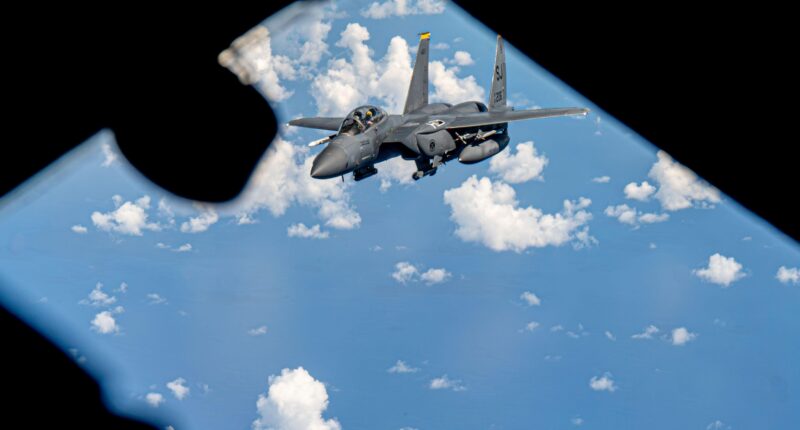
An F-15 Eagle in flight. Image: NAVAIR
US Air Force and Marine Corps repair teams have joined forces to send a damaged F-15 back to flight status in just a few hours, far ahead of the original several-month timeline.
The 18th Maintenance Group (18 MXG) at Kadena Air Base in Japan reached out to Marine Aircraft Logistics Squadron 36 (MALS-36) to leverage its on-site additive manufacturing equipment in repairing a malfunctioning cooling duct.
Within 12 hours, the teams printed, delivered, and installed two prototypes that restored the duct to operational condition, beating engineers’ original four-month repair estimate.
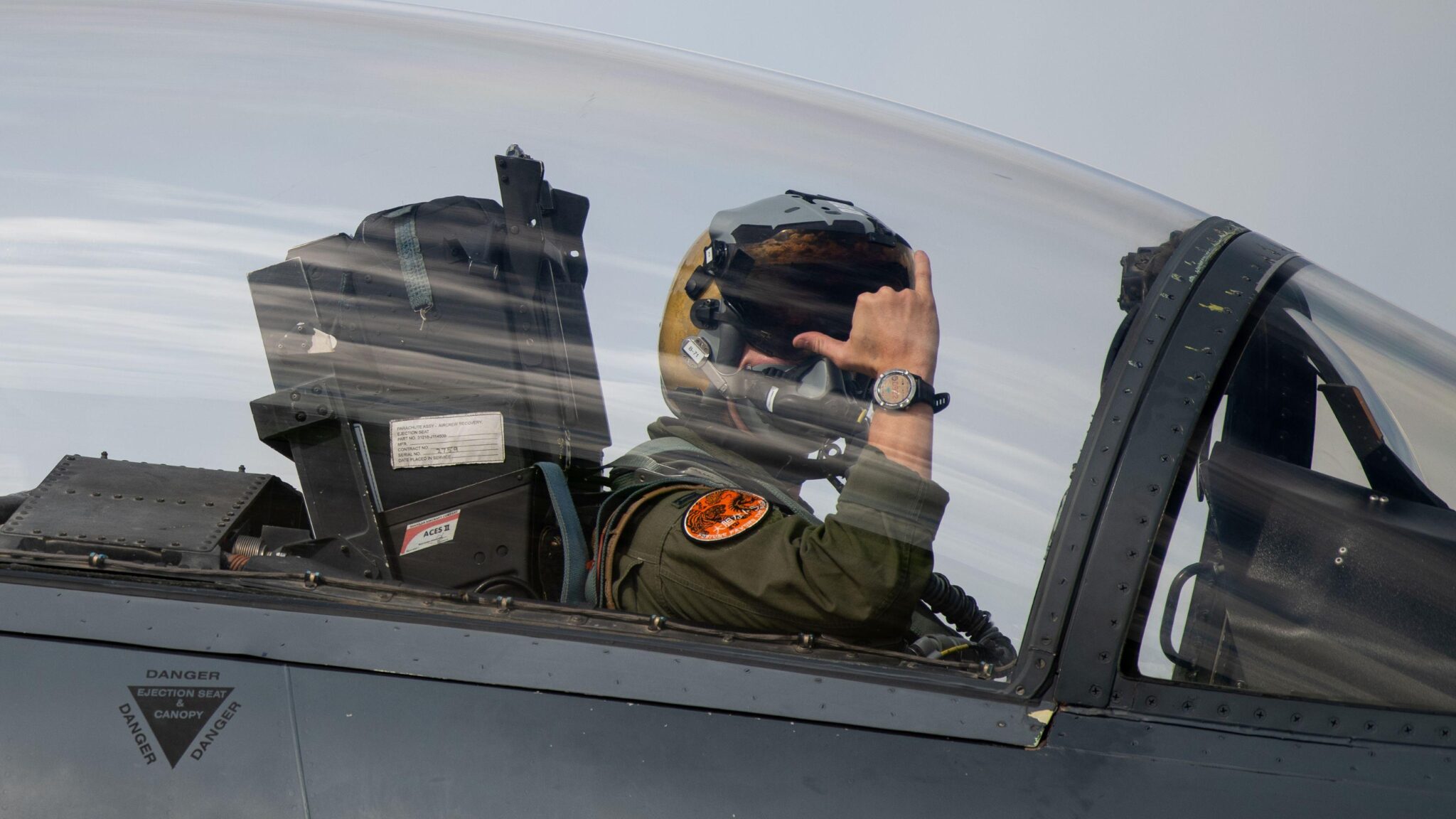
An Air Force pilot flying an F-15 aircraft. Image: NAVAIR
Further inspections led to an improved design that reduced printing time by two hours, an innovation that could speed future repairs even more.
“Here was a situation where a multi-million dollar aircraft was going to be sidelined for months due to the lack of a part in the supply system,” Naval Air Systems Command Additive Manufacturing Program Manager Theodore Gronda said.
“18 MXG was backstopped by MALS-36’s AM capability and they even got a better and quicker [additive manufacturing] design out of the collaboration.”
Saving Costs and Time
Additive manufacturing builds replacement parts layer by layer, on-site and on-demand, enabling rapid repairs where traditional supply chains fall short.
Depot Liaison Engineer Diego Carrillo said the process is crucial in situations where repair items are hard to source or have long lead times.
“In applications where 3D manufactured parts are a viable option and are non-procurable or have a long lead time, using this capability can offer cost and time savings,” he added.
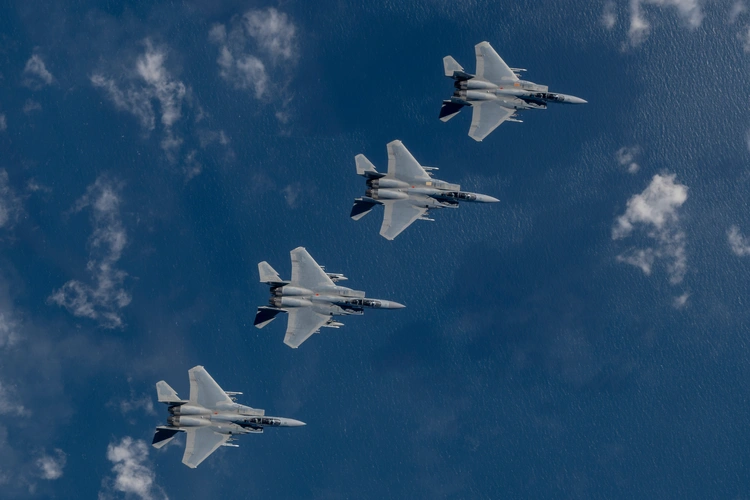
A formation of four F-15 jets. Image: Blake Wiles via DVIDS
The air force now plans to incorporate additive manufacturing into standard technical processes, replicating these results across the F-15 fleet.
“The duct’s new printing requirements are now part of the Air Force’s AM technical publications and will be used for similar repairs across the F-15 community,” Carrillo stated.
“Cooperative and joint exercises with sister services and other stakeholders can help cross-pollinate ideas and methodologies, strengthen partnerships and increase force effectiveness.”
3D Printing Sends Broken F-15 Back to Action Within Hours
-
jemhouston

- Posts: 6477
- Joined: Fri Nov 18, 2022 12:38 am
3D Printing Sends Broken F-15 Back to Action Within Hours
https://nextgendefense.com/3d-printing-broken-f15/
-
clancyphile
- Posts: 645
- Joined: Thu Nov 17, 2022 11:28 am
Re: 3D Printing Sends Broken F-15 Back to Action Within Hours
How hard to 3D print an entire airframe?
-
jemhouston
- Posts: 6477
- Joined: Fri Nov 18, 2022 12:38 am
Re: 3D Printing Sends Broken F-15 Back to Action Within Hours
Probably depends on the size and purpose of the airframe. An attack drone, probably easy. Anything carrying a person, I don't know.
-
Belushi TD
- Posts: 1856
- Joined: Thu Nov 17, 2022 11:20 am
Re: 3D Printing Sends Broken F-15 Back to Action Within Hours
How the hell did they get THAT approved for use on an aircraft? Do the airliner standards not apply to military aircraft? Don't they have standards of their own?
I'd like some of the chaps who do stuff with airplanes to chime in on this please.
Belushi TD
I'd like some of the chaps who do stuff with airplanes to chime in on this please.
Belushi TD
-
Nightwatch2
- Posts: 2431
- Joined: Fri Nov 18, 2022 4:50 am
Re: 3D Printing Sends Broken F-15 Back to Action Within Hours
The US services have been experimenting with this. I suspect it depends upon which parts are being produced.Belushi TD wrote: ↑Wed Dec 24, 2025 2:10 pm How the hell did they get THAT approved for use on an aircraft? Do the airliner standards not apply to military aircraft? Don't they have standards of their own?
I'd like some of the chaps who do stuff with airplanes to chime in on this please.
Belushi TD
The ISS has been equipped with a printer for manufacturing spacecraft parts while in orbit.
This is all really “taking off” and “out of this world”

Re: 3D Printing Sends Broken F-15 Back to Action Within Hours
Yeah all the services are starting to get 3D-printing in use here in Sweden as well.
As for 3D-printing an airframe, for unmanned systems it’s starting to become doable, see this thread: https://tboverse.com/viewtopic.php?t=3880
As for 3D-printing an airframe, for unmanned systems it’s starting to become doable, see this thread: https://tboverse.com/viewtopic.php?t=3880

Re: 3D Printing Sends Broken F-15 Back to Action Within Hours
So it's for a cooling duct. If - as I suspect - that's already a thermoplastic and quite a small part then 3D printing might be appropriate if the right material is used. However, great care needs to be used - there was a recent crash in the UK where a 3D printed air duct (purchased at a US airshow) softened and collapsed causing air starvation to the engine. It's worth noting that this part won't have gone through the qualification we would be required to put it through to use it without losing our accreditation in the time schedule reported - not to say it hasn't happened, just that it's a time consuming process which isn't mentioned in the article.Belushi TD wrote: ↑Wed Dec 24, 2025 2:10 pmHow the hell did they get THAT approved for use on an aircraft? Do the airliner standards not apply to military aircraft? Don't they have standards of their own?
I'd like some of the chaps who do stuff with airplanes to chime in on this please.
3D printing an entire aircraft is possible but really not worth it - although we're closer than most people think. For instance the 787 has an all-composite fuselage barrel which is manufactured using an automated fibre placement machine, 3D printing by another route to the standard "melt it" one. There are some parts where you just can't achieve the required material properties - HP turbine blades for instance - and others such as sheet metal parts where it's just ridiculously expensive.
Main hurdle is cost - classical subtractive processes are highly refined and are continuing to get better very rapidly as they take advantage of new developments in software, etc. That makes justifying a new process - not yet anywhere near the same level of refinement - tough unless you can take advantage of the geometric freedom it offers you to design a better part which buys it's way onto the airframe through weight savings, etc. I'm doing that at the moment - it's very much non-trivial as for instance conventional parts are often (but not always) made from stronger materials due to the possibility of tuning grain size and alignment, better heat treatment options, etc.
War is less costly than servitude. The choice is always between Verdun and Dachau. - Jean Dutourd
Re: 3D Printing Sends Broken F-15 Back to Action Within Hours
all hail the beta strap and buffing wheels for just in time delivery - remember, close enough is good enough for government work