A Total Amateur May Have Just Rewritten Human History With Bombshell Discovery
In what may be a major archaeological breakthrough, an independent researcher has suggested that the earliest writing in human history has been hiding in plain sight in prehistoric cave paintings in Europe, a discovery that would push the timeline of written language back by tens of thousands of years, reports a new study.
Hundreds of European caves are decorated with mesmerizing paintings of animals and other figures that were made by our species between roughly 15,000 and 40,000 years ago, during the Palaeolithic Age when humans were still hunter-gatherers. These cave paintings often include non-figurative markings, such as dots and lines, that have evaded explanation for decades.
Ben Bacon, a furniture conservator based in London, U.K. who has described himself as “effectively a person off the street,” happened to notice these markings while admiring images of European cave art, and developed a hunch that they could be decipherable. Now, Bacon has unveiled what he believes is “the first known writing in the history of Homo sapiens,” in the form of a prehistoric lunar calendar, according to a study published on Thursday in the Cambridge Archeological Journal.
“I think that the cave paintings fascinate us all because of their beauty and visceral immediacy,” Bacon told Motherboard in an email. “I was idly looking at Palaeolithic paintings one night on the Web and noticed, purely by chance, that a large number of animals had what I took to be numbers associated with them.”
Intrigued by the markings, Bacon launched a meticulous effort to decode them, with a particular focus on lines, dots, and a Y-shaped symbol that show up in hundreds of cave paintings.
Previous researchers have suggested that these symbols could be some form of numerical notation, perhaps designed to count the number of animals sighted or killed by these prehistoric artists. Bacon made the leap to suggest that they form a calendar system designed to track the life cycles of animals depicted in the paintings. He enlisted leading archaeologists from Durham University and the University College London to develop the idea and co-author the new study.
“That we are looking for number-based information about specific prey animals is therefore our point of departure,” the researchers explained in the study. “It seems to us unnecessary to need to convey information about the numbers of individual animals, the times they have been sighted, or the number of successful kills.”
“It seems far more likely that information pertinent to predicting their migratory movements and periods of aggregation, i.e. mating and birthing when they are predictably located in some number and relatively vulnerable, would be of greatest importance for survival,” they added.
The researchers note that the paintings are never accompanied by more than 13 of these lines and dots, which could mean that they denote lunar months. The lunar calendar they envision would not track time across years, but would be informally rebooted each year during a time in late winter or early spring known as the “bonne saison.” The “Y” symbol, which is commonly drawn directly on or near animal depictions, could represent birthing because it seems to show two parted legs.
“We adopt the simple solution that they started counting months at the start of the bonne saison and continued until counting became irrelevant in late winter—simply re-starting the count of months at the start of the next bonne saison,” the team said in the study. “A great advantage of this calendar is that it is stable in describing the life-cycles of animals and plants despite great geographical and cultural differences in the European Upper Palaeolithic.”
To test out this hypothesis, the team compiled a database of more than 600 line and dot sequences without the Y symbol, as well as some 250 sequences with the Y, which appear mostly in paintings from France and Spain. These sequences span tens of thousands of years, and accompany many different animal depictions, such as aurochs, birds, bison, caprids (such as goats and antelopes), deer, fish, horses, mammoths, and extinct rhinos that once lived in Europe.
After conducting a statistical analysis of the database, Bacon and his colleagues were amazed to find that their lunar calendar seems to hold up well with the patterns.
“Overall, there is a remarkable degree of correlation between the numbers of lines/dots in sequences with and without <Y> and the position of <Y> and the mating and birthing behaviors of our analytical taxa,” the researchers said in the study. “Our data do not explain everything, but even taking imprecision and regional variability into account, the degree of support for our hypothesis is striking.”
“Our data indicate that the purpose of this system of associating animals with calendar information was to record and convey seasonal behavioral information about specific prey taxa in the geographical regions of concern,” they added.
Bacon told Motherboard that putting all of this together has been “exhausting” and that the team will hold off on celebrating until they have published all of their findings. The researchers also anticipate arguments among experts around the exact definition of “writing” and whether their hypothetical calendar would neatly fall into that category.
“We do not want to press the controversial (and in many senses, semantic) question of whether writing was a Paleolithic invention; perhaps it is best described as a proto-writing system, an intermediary step between a simpler notation/convention and full-blown writing,” the researchers said in the study.”
“Assuming we have convinced colleagues of our correct identification, there will no doubt be a lively debate about precisely what this system should be called, and we are certainly open to suggestions,” they continued. “For now, we restrict our terminology to proto-writing in the form of a phrenological/meteorological calendar. It implies that a form of writing existed tens of thousands of years before the earliest Sumerian writing system.”
It would be hard to overstate the magnitude of this discovery, assuming it passes muster in the wider archaeological community. It would rewrite the origins of, well, writing, which is one of the most important developments in human history. Moreover, if these tantalizing symbols represent an early calendar, they offer a glimpse of how these hunter-gatherers synchronized their lives with the natural cycles of animals and the Moon.
In short, if the new hypothesis is accurate, it shows that our Paleolithic ancestors “were almost certainly as cognitively advanced as we are” and “that they are fully modern humans,” Bacon told Motherboard. It also means “that their society achieved great art, use of numbers, and writing” and “that reading more of their writing system may allow us to gain an insight into their beliefs and cultural values,” he concluded.
A Total Amateur May Have Just Rewritten Human History With Bombshell Discovery
A Total Amateur May Have Just Rewritten Human History With Bombshell Discovery
Wow. Just such a cool discovery. Makes perfect sense that this is what it would be too.

Re: A Total Amateur May Have Just Rewritten Human History With Bombshell Discovery
The boundaries of human history keep getting pushed back, earlier and earlier, this,Göbekli Tepe might point to something huge, but as yet unkown at came to an end at the last Ice Age( no, not f#@King ancient aliens)
-
Nightwatch2
- Posts: 2041
- Joined: Fri Nov 18, 2022 4:50 am
Re: A Total Amateur May Have Just Rewritten Human History With Bombshell Discovery
In the last couple of years, I think we have pushed modern Humans in the Americas from 12000 to 25000 years
Re: A Total Amateur May Have Just Rewritten Human History With Bombshell Discovery
 Another pic with more of the examples:
Here’s the academic write up:
https://www.cambridge.org/core/journals ... 7840B4FE19
-
Rocket J Squrriel
- Posts: 1073
- Joined: Thu Nov 17, 2022 5:23 pm
Re: A Total Amateur May Have Just Rewritten Human History With Bombshell Discovery
With the Tollense valley battlefield they are learning that the 13th century BCE northern Europe was much different than they thought it was. A battle of over 4000 warriors says things were more organized than anyone though.MFOM wrote: ↑Sat Jan 07, 2023 4:39 amIn the last couple of years, I think we have pushed modern Humans in the Americas from 12000 to 25000 years
https://en.wikipedia.org/wiki/Tollense_ ... attlefield
Westray: That this is some sort of coincidence. Because they don't really believe in coincidences. They've heard of them. They've just never seen one.
-
jemhouston

- Posts: 6024
- Joined: Fri Nov 18, 2022 12:38 am
Re: A Total Amateur May Have Just Rewritten Human History With Bombshell Discovery
Just having 4K people in the same area would be huge. You' have to get them there, food, water, and sanitation for all of them.
Re: A Total Amateur May Have Just Rewritten Human History With Bombshell Discovery
Random Hot take theory .A great war in bronze age Europe,with the loosers been driven out to the south becoming the sea peoples? A sudden heavily armed band of refugees overrunning settled empires,wouldn't be the first time it happened(okay it actually would be the first time if it happened,but the Huns pressing goths and others against the Roman empire would be the historic example)
-
Rocket J Squrriel
- Posts: 1073
- Joined: Thu Nov 17, 2022 5:23 pm
Re: A Total Amateur May Have Just Rewritten Human History With Bombshell Discovery
Now they are finding out some may have traveled hundreds of miles to the battlefield or that there was a more extensive trading network. Items have been found from the Bohemia and eastern France and Bavaria.jemhouston wrote: ↑Mon Jan 09, 2023 1:34 am Just having 4K people in the same area would be huge. You' have to get them there, food, water, and sanitation for all of them.
https://www.smithsonianmag.com/history/ ... 180973353/
Last edited by Rocket J Squrriel on Mon Jan 09, 2023 4:37 am, edited 1 time in total.
Westray: That this is some sort of coincidence. Because they don't really believe in coincidences. They've heard of them. They've just never seen one.
Re: A Total Amateur May Have Just Rewritten Human History With Bombshell Discovery
On the topic of older civilizations I cane to think of the so-called Eye of the Sahara or the Richat structure.
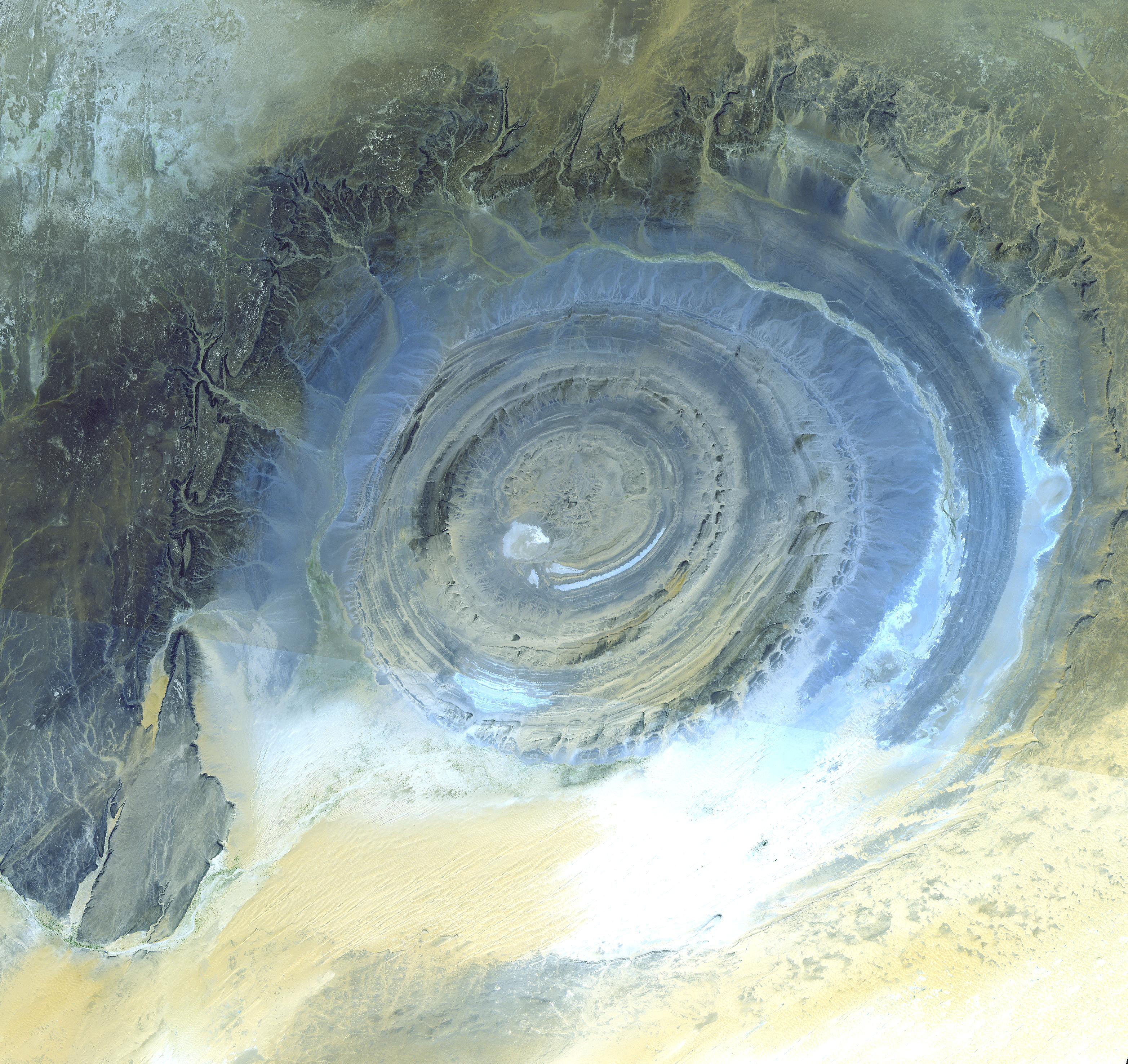
This is a very unusual geological formation in present day Mauretania.
What makes it particularly interesting is that the shape and features, along with the location, matches that of some accounts of that famed mythological civilization of Atlantis. For instance Plato described the capital of atlantis of being surrounded by three rings of water and two rings of land. Here’s an illustration of that description.
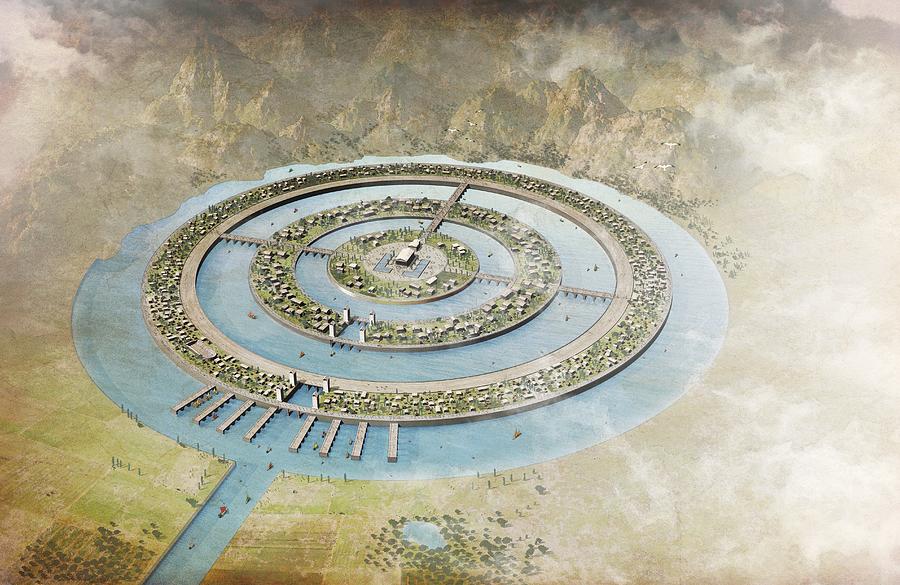
The structure had water flowing through it at one point, and other geographic features as described in the ancient accounts of Atlantis also match that of the steucture, plains, mountains to the North, etc.
But lets go back to the origin of the Atlantis myth. Plato made it known to the world, but Plato got it from Egypt, from priests who told him the story. More recently there’s been discovery of hieroglyphic inscriptions in an Egyptian temple, Edfu, which appears to tell the origin story of the Egyptian people. Not only by the way of gods and such, but something more tangible. Specifically it explains that the Egyptians came from another location originally. That the Egyptians of the time were actually the survivors of a disaster that had brought down their earlier civilization. A civilization that they described as located over where the strucure is, and with enough detail that it is clear that the text refers to the same myth as Plato got from the Egyptian priests. They were a river civilization that relocated to another great river, the Nile.
There’s a lot more circumstantial stuff that also points towards the Eye of the Sahara being where the mythological Atlantis was located in reality. This is a very controversial idea of course, and you won’t see many scholars jumping on this bandwagon in public. I do hope that eventually something more tangible will be found so that perhaps it will be confirmed that there once were a civilization there.
This is a very unusual geological formation in present day Mauretania.
What makes it particularly interesting is that the shape and features, along with the location, matches that of some accounts of that famed mythological civilization of Atlantis. For instance Plato described the capital of atlantis of being surrounded by three rings of water and two rings of land. Here’s an illustration of that description.
The structure had water flowing through it at one point, and other geographic features as described in the ancient accounts of Atlantis also match that of the steucture, plains, mountains to the North, etc.
But lets go back to the origin of the Atlantis myth. Plato made it known to the world, but Plato got it from Egypt, from priests who told him the story. More recently there’s been discovery of hieroglyphic inscriptions in an Egyptian temple, Edfu, which appears to tell the origin story of the Egyptian people. Not only by the way of gods and such, but something more tangible. Specifically it explains that the Egyptians came from another location originally. That the Egyptians of the time were actually the survivors of a disaster that had brought down their earlier civilization. A civilization that they described as located over where the strucure is, and with enough detail that it is clear that the text refers to the same myth as Plato got from the Egyptian priests. They were a river civilization that relocated to another great river, the Nile.
There’s a lot more circumstantial stuff that also points towards the Eye of the Sahara being where the mythological Atlantis was located in reality. This is a very controversial idea of course, and you won’t see many scholars jumping on this bandwagon in public. I do hope that eventually something more tangible will be found so that perhaps it will be confirmed that there once were a civilization there.

Re: A Total Amateur May Have Just Rewritten Human History With Bombshell Discovery
Were you watching the joe rogan episode micael? heh.
Re: A Total Amateur May Have Just Rewritten Human History With Bombshell Discovery
And now new finds just pushed back the use of obsidian tools by 500,000 years to 1.2 million years ago.
1.2-Million-Year-Old Obsidian Axe Factory Found In Ethiopia
An unknown species of human apparently mastered obsidian, something it had been thought only occurred in the Stone Age.
1.2-million-year-old obsidian handaxe
An obsidian handaxe, made by an unknown hominid 1.2 million years ago. Image credit: Margherita Mussi
Forged in magma and capable of producing the sharpest blades on Earth, obsidian is without a doubt one of the most badass materials ever imagined (there's a reason George RR Martin made it the weapon of choice to kill White Walkers). The jet-black volcanic glass is also extremely delicate and dangerous to work with, and was not mastered by humans until the latter part of the Stone Age… or so we thought.
Reporting on the latest findings from the Melka Kunture archaeological site in Ethiopia, a team of researchers has described the discovery of an obsidian handaxe workshop within a layer of sediment dated to 1.2 million years ago. This represents a staggeringly early example of obsidian shaping, and, according to the study authors, is the only handaxe factory ever dated to the Early Pleistocene.
“[Archaeological] sites described as ‘knapping workshops’ are only recorded in the second half of the Middle Pleistocene and only in Europe so far,” write the researchers. Located predominantly in France and the UK, the most notable Stone Age axe workshops were all associated with the creation of flint blades.
“Generally speaking, obsidian is extensively used only from the Middle Stone Age onwards,” write the study authors.
However, during the course of their excavations, the team came across an ancient layer of sediment containing a cache of 578 stone tools, all but three of which were sculpted from obsidian. “We show through statistical analysis that this was a focused activity, that very standardized handaxes were produced and that this was a stone-tool workshop,” they write.
Describing the axes, the researchers repeatedly marvel that “the morphological standardization is remarkable,” and while they don’t know which species of human crafted the tools, they say that whoever created them diligently applied “secondary retouches” and was highly “focused on the final regularization of the artifacts.”
Achieving such homogeneity would have required highly sharpened skills and a fair amount of dexterity, as obsidian is a fragile rock that must be knapped with considerably more finesse than flint or basalt. “Accordingly, manufacturers had to accurately evaluate the strength of the blow to avoid producing flakes of little use, or just to avoid smashing the core,” explain the researchers.
Techniques for shaping obsidian are believed to have first emerged during the Upper Paleolithic, and even modern knappers wear protective gloves to avoid shredding their hands when working with the razor-sharp material. And yet, when describing tools from over a million years ago, the study authors say that “the standardized obsidian handaxes provide ample evidence of the repetitive use of fully mastered skills.”
The emergence of such abilities marks a surprisingly massive cognitive leap for such an ancient group of humans. According to the authors, the adaptation of existing flint knapping techniques to create more challenging obsidian tools can be seen as an example of “convergent thinking”, which is associated with creative problem-solving.
Hailing this remarkable achievement, the researchers say the old axe makers “creatively solved through convergent thinking technological problems such as effectively detaching and shaping large flakes of the unusually brittle and cutting volcanic glass.”
All without any protective gloves. Over a million years ago.
The study is published in the journal Nature Ecology & Evolution.