You were presented with a smooth rounded stone, weighing usually from 120 kg (264 lb) to 170 kg (374 lb) depending on your location. You were expected to lift this stone at least waist high, but preferrably chest high, and for bonus points walk a few steps with it. That got you the job, if you were unable to you were out of luck. In some places this practice continued until the mid-20th century. In many places there were also smaller stones that would be lifted by young farm helpers, around ten years old, to prove that they could now be useful in some tasks around a farm.
Here’s a couple of examples of the stones.


Usually there was at least one in each parish, and you were considered a fully grown man until you had been able to lift it. They were called ”drängasten” (farmhand stone), ”styrkesten” (strenght stone) or ”giftassten” (marriage stone) depending on where you were. Marriage? Yes, in some places you weren’t allowed to enter into marriage until you had lifted the stone and thereby demonstrated that you were a fully capable man. Furthermore the stones often featured at events where young men would compete in lifting them with young women looking on.
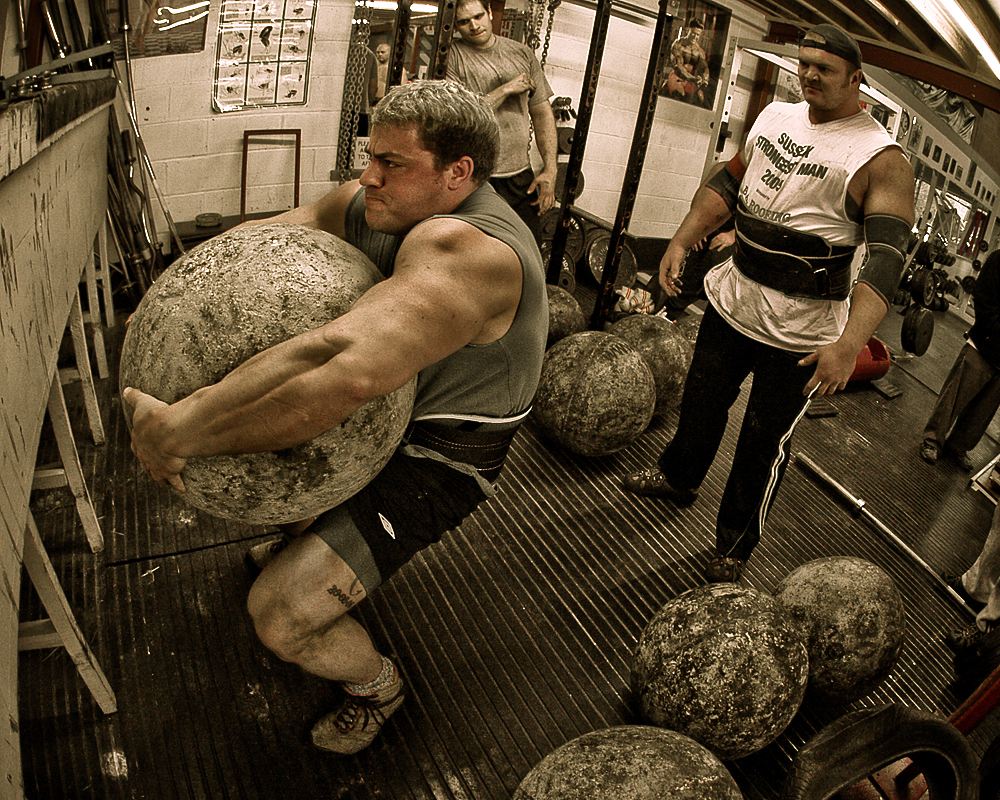
Here’s a modern example of a lift attempt.

The history of these goes back to at least the vikkng age, probably earlier, and there is some reference to these in the norse sagas. Thor has a sort of a stone lifting contest in one of them.
The practice also survived in Iceland and the Faraoe Islands. In Iceland it evolved into an employment test for jobs on the fishing boats, in which a prospective employee would lift a series of stones of increasingly greater size and weight and the results determined the position and salary you would get on the boat. From this Icelandic tradition came the current stone lifting events in Strong Man competitions.
In Iceland the epitome of strenght was if you managed to pick up a specific stone, the Husafell stone, and carry it around a goat pen. This weighs 190 kg (419 lb) and only if you succeeded in this you were deemed ”fullsterkur”, or fully strong.
The stones also slotted into the folklore, with it not being entirely unusual that they were claimed to be enchanted or possessed by some sort of supernatural being. This also fitted in with the marriage aspect, if someone had been unsuccessfull in lifting a stone and proving himself worthy of marriage the judgement from onlookers could be that he had done something to be punished by the spirits, and could thus also lead to a measurement of shunning by vary locals who didn’t know how bad the presumed thing he had done was.
Yet another aspect of the past that is fascinating.

