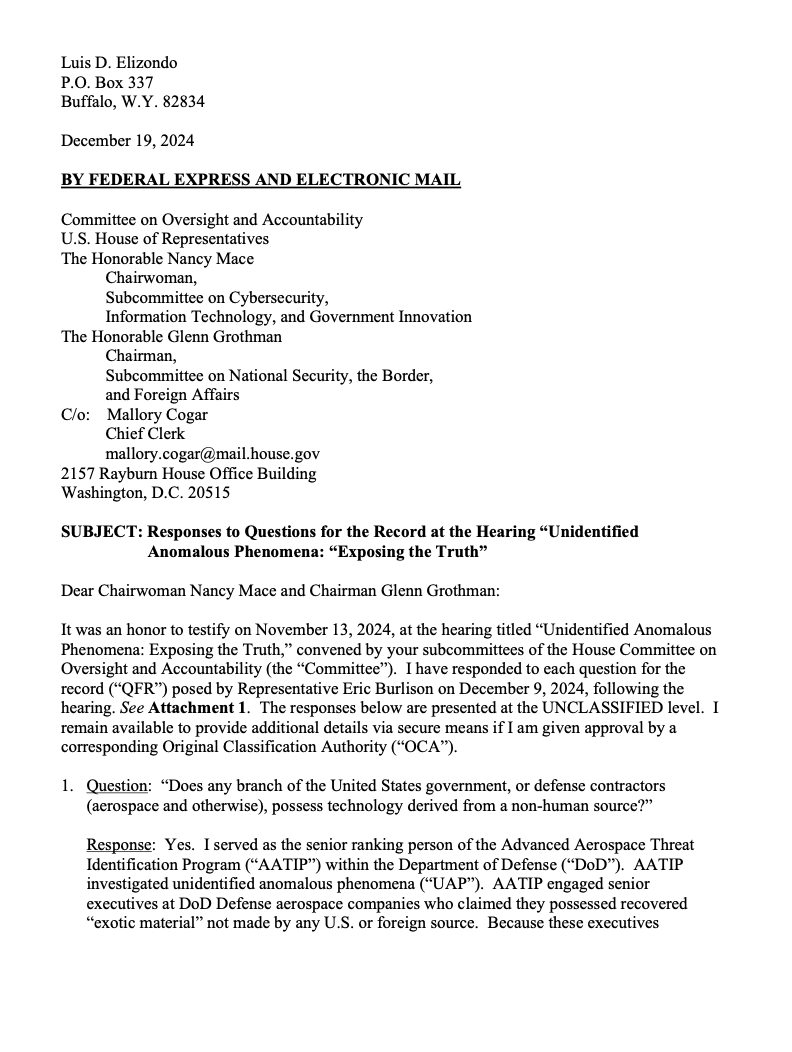
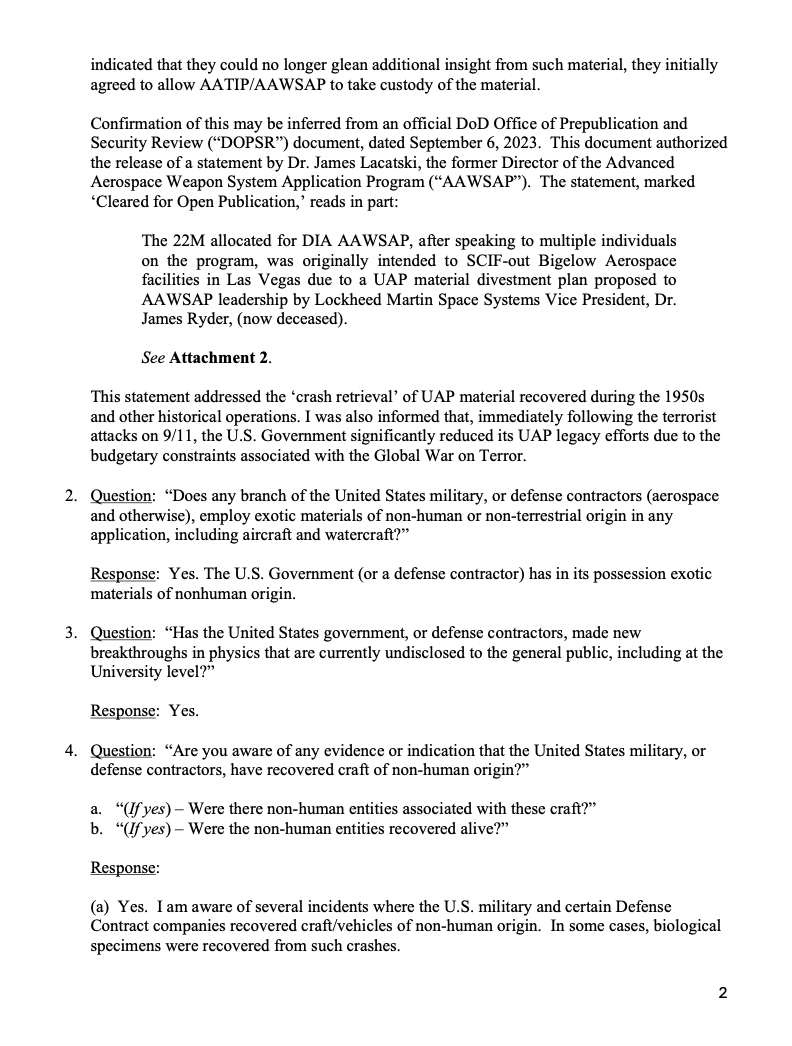
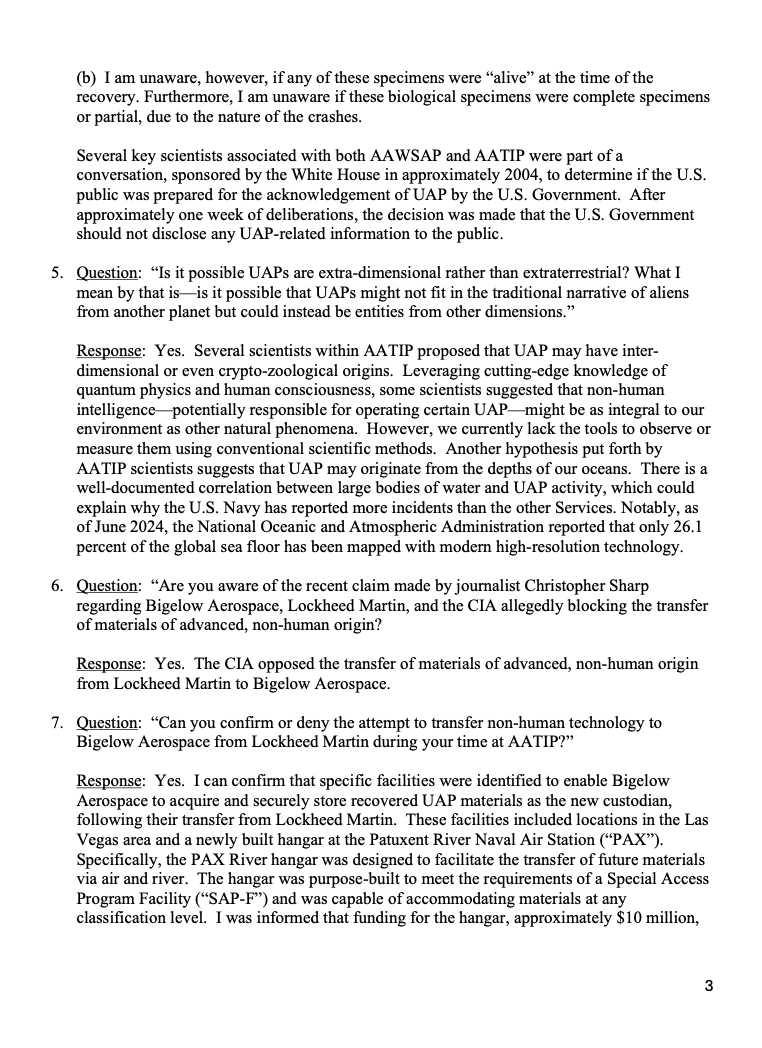
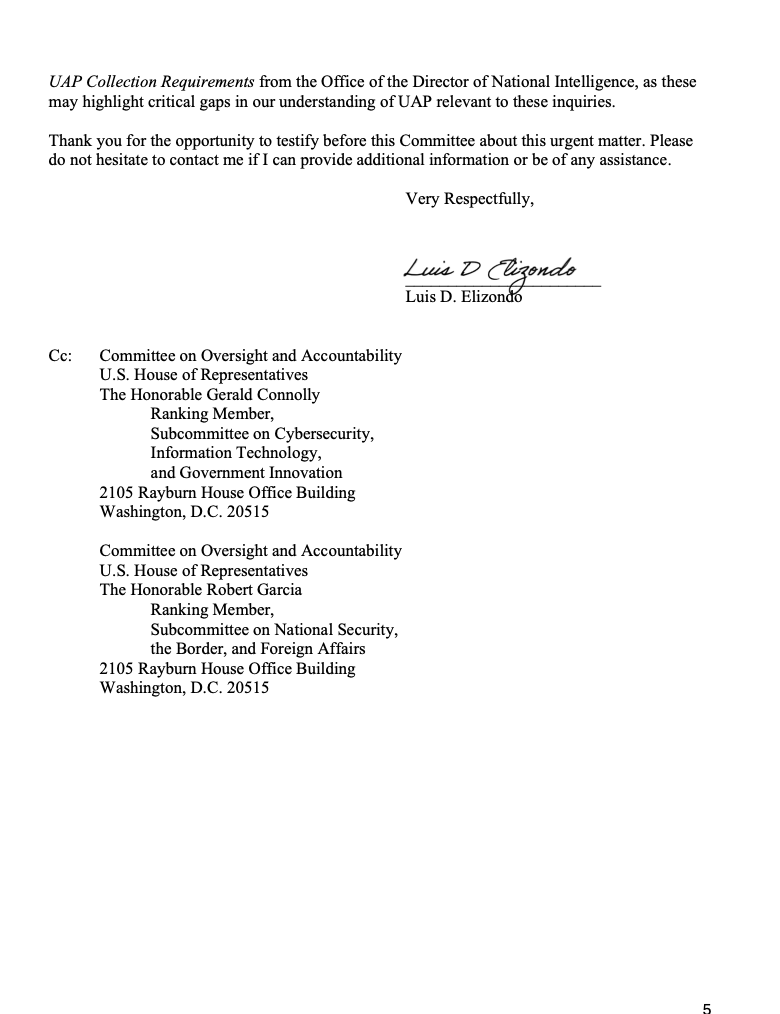
Bit interesting information dropped by Larry Lemke in a online video discussion. He’s an aerospace engineer at NASA Ames Research Center. He says that his father once confided in him that he had worked on crash retrieval materials, and that he was able to verify that to some extent:
Peter Skafish @heterology: "What's the thing that's led you to understand the most, there really has been long standing secrecy about UAP from the U.S. government?"
Larry Lemke: "Well, probably the most convincing thing is, my father worked for the Lawrence Berkeley Rad Lab from about roughly 1955 to 1965."
Skafish: "And just quick, you mean the Lawrence Berkeley radioactive materials or radiation lab."
Lemke: "Radiation Lab, yeah. Which was part of the Manhattan Project. In fact, it was the...that's where Oppenheimer and Teller and Lawrence and all those guys, you know, that's where they started, in the physics department there at Berkeley and the Rad Lab.
"And so, he worked there, as I said, approximately 10 years from about 1955 to roughly 1965. And later in life, after I had become a professional aerospace engineer and worked for NASA and so forth, I got him talking about, you know, what he did there, what was happening. And this was around the time that the whole Roswell story was starting to become big, around, I guess, the mid-to-late 1980s where people like Jesse Marcel were coming out, and so forth and so on.
"And my father confided in me that when he was at the Rad Lab there, he had actually been tasked, at one point, to work on pieces of recovered UFOs. In fact, the exact words he used, he says, you know, 'I worked on a piece of that thing that crashed in New Mexico.' And interestingly enough, he never actually said Roswell. So, given that there might have been more than one thing that crashed in New Mexico - I'm not really sure what it would have been - but reported working with some of these materials, and the so-called Roswell memory foil in particular.
"And so, at the time, I actually, within NASA, I had a security clearance, and I had to pause and sort of wonder, you know, was I just a recipient of unauthorized disclosure of classified information (laughs)? And I ultimately decided, no, I wasn't because, you know, I mean, some level, just a conversation. You know, it's not like I've been read into a program or something.
"But, in any case, you know, I sort of prodded at that and tried to cross check it and verify and so forth. And to some extent, did.
"And so, it was actually, during the course, more recently, when David Grusch came out and and pointed out that the the Atomic Energy Act was modified in 1955 in a kind of a clever way to include UFO materials under the topic, or under the category of special-nuclear material. That, to me, it kind of provided some more validation.
So, I had long thought and had long figured out that,
given that there was a highly-classified component of the so-called Legacy program, that a large and probably more sensitive component of it was inside the the Atomic Energy Commission of what is now, of course, the [Department of] @ENERGY. Which, to me, would be very logical place to put it.
"I've thought for quite some time that the UFO secrecy program was modeled very closely on the Manhattan Project, having come out of around the same time and out of the same sort of national-security, you know, mentality. So, to me, it made perfect sense that that would be...given, you know, 1945 or six or seven, if you were looking for a model of how you would keep something like this highly classified, that would probably be what you would use as the model.
"And so that actually kind of ties in, I think, with what Hal was was talking about. To me, the model for declassification would also probably follow the pattern of what happened then. Because, of course, the bomb was developed under high levels of secrecy, but once it was used, the secret was out. I mean, the secret that we could do that was out. You couldn't hide that anymore, and so you had to admit it.
"And so, what we did was, among other things, in order to develop nuclear technology in the civilian world or even inside the military, you had to bring on...you had to educate a new generation of scientists and engineers with the knowledge that they would need to be able to to build nuclear reactors and things like that. And so they had to declassify a certain amount of the information in order for there to be, you know, a workforce that was adequate to develop.
"And I think the same thing would probably apply here. At some point, you'll have to declassify enough of the knowledge so that if you really do want to develop this technology [on] a large scale, there's gonna be enough people in the professional workforce to be able to deal with it. Again, you know, you're probably gonna wanna retain some of the more sensitive stuff that's gonna probably have, you know, weapons implications and so forth, to keep that classified as as we do with with H bombs today. You know, that's still classified. But I think that, to me, that's probably the model that we should be looking at."