I’ve not been here for a while, and it’s been even longer since I posted. But recently I’ve found myself drawn back to naval fiction and alternate history - helped I’m sure by a few long car journeys where my only company was Alistair Maclean audio books.
For entertainment (of myself mainly) I’ve started fiddling with pictures and doing bits and bobs of writing - in a variety of styles.
Hope you find them half as much of an entertaining diversion as I have.
Nautical Vignettes
Re: Nautical Vignettes
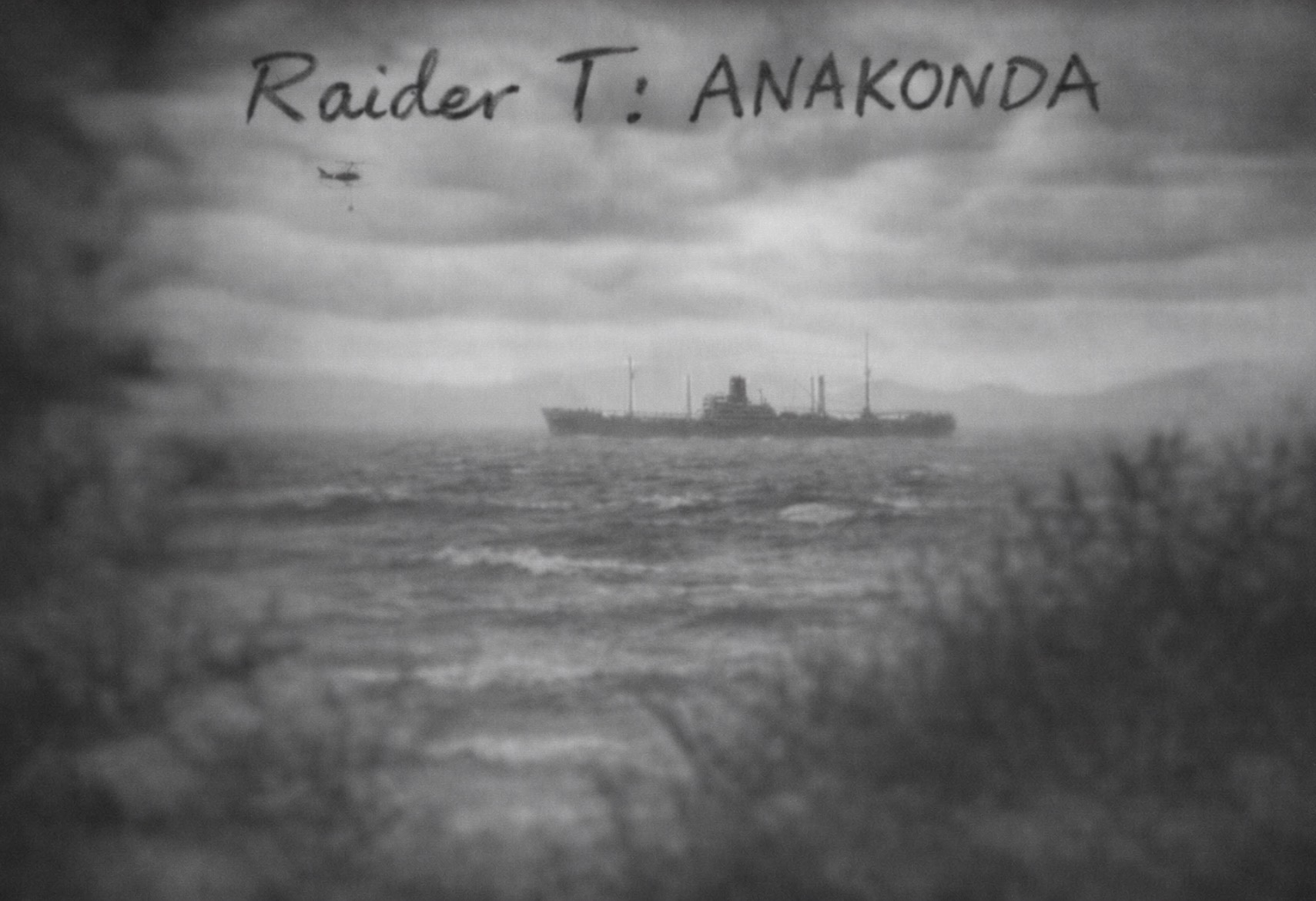
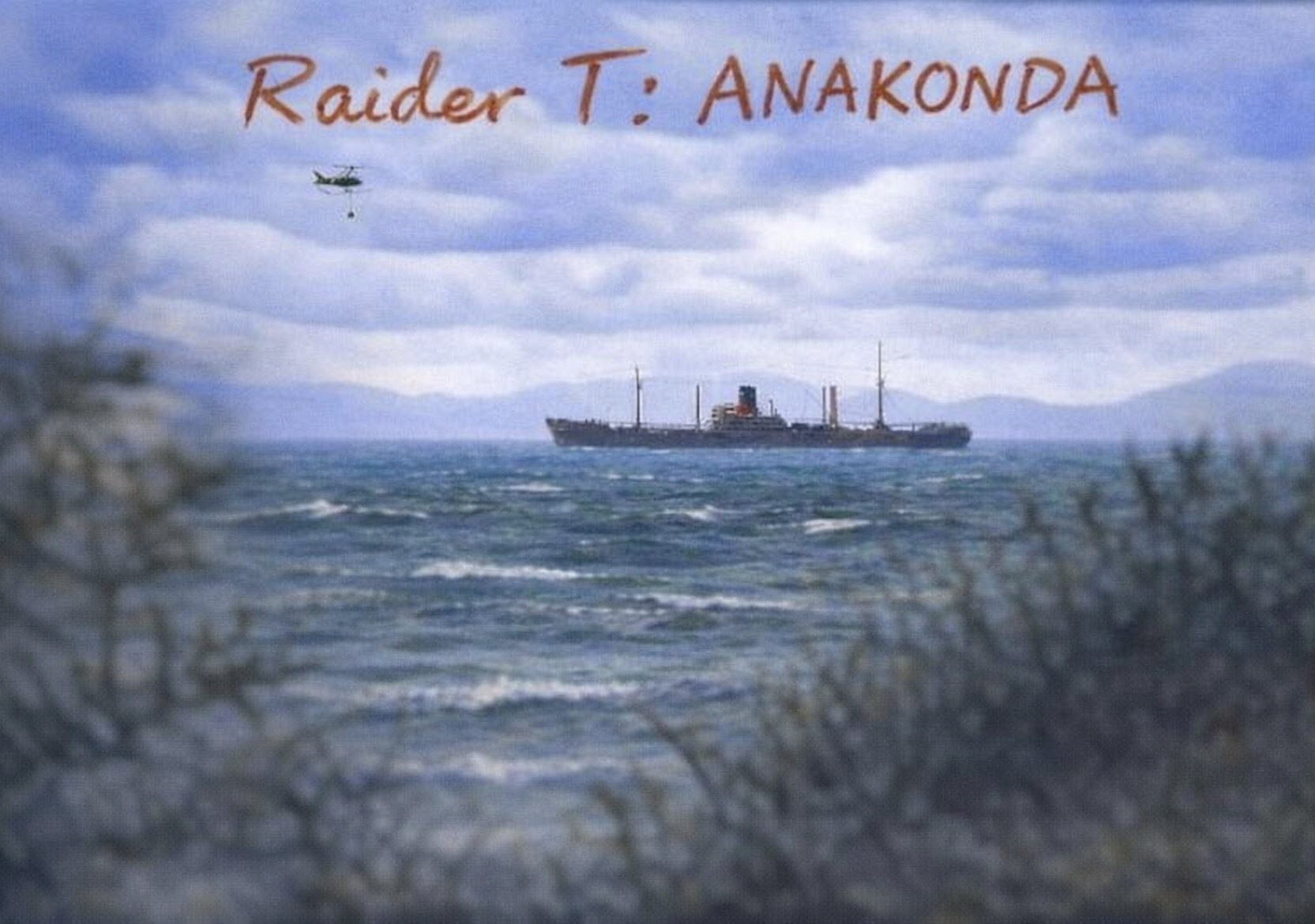
Kreigsmarine Handelsstörkreuzer ANAKONDA receiving stores from a Fa 223 Drache helicopter off Flensburg, photographed covertly by an agent of the Danish security service Sikkerhedspolitiet. At the time of observation the vessel was operating under the guise of the merchantman Kärntenmann, ostensibly conducting sea trials prior to commencing service on the East Asia route. Following this rendezvous, ANAKONDA transited the Little Belt and proceeded into the North Sea.
Second image: later colourised version of the original black-and-white intelligence photograph; colours are conjectural and should not be taken as an accurate representation of original appearance.
Re: Nautical Vignettes
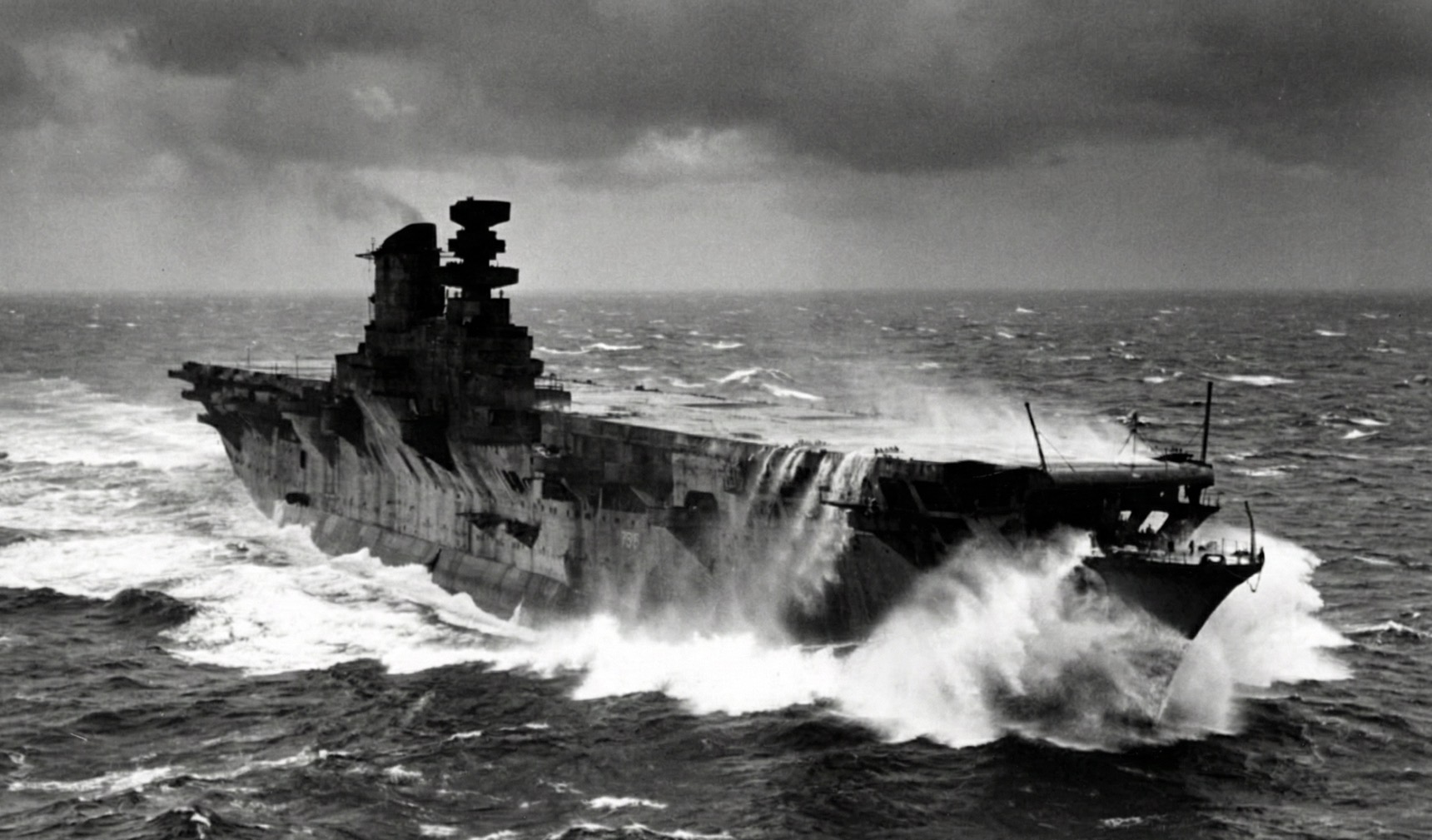
Portaerei Falco labours through a heavy swell around off the Horn of Africa on her maiden visit to Somalia Italiana. Bound for Mogadishu, and supported by battleship Impero, cruisers Pola, Eugenio di Savoia, Paolo Emilio and Vipsanio Agrippa, and eight modern destroyers, it was the first major Italian deployment into the Indian Ocean and a cause for major concern for the Royal Navy.
The flotilla was tailed at a respectful distance by the Royal Navy minelayer Welshman.
A converted ocean liner formerly known as Augustus, Falco and her sister Aquila (formerly Roma) became Italy’s first two aircraft carriers after arduous conversions at Ansaldo in Genoa.
Both liners were completely gutted to allow replacement of the machinery and the addition of a hangar deck and workshops. Deep bulges were added to either side of the hull to improve stability, hull form and provide some element of torpedo defence.
The hull was also lengthened to take advantage of the increased power of the new machinery, and the bow flare increased to increase seaworthiness and provide additional space for air requirements.
The carrier’s new machinery was derived from that fitted to the Capitani Romani-class light cruisers, with each carrier receiving the equivalent of two cruiser sets, with an installed capacity of 151,000shp, enough to reach 30knots.
Initial plans had included a complex system of rails, elevators and catapults to move aircraft around the ship, experience and insight from the Kreigsmarine’s Graf Zeppelin and first to commission Aquila resulted in Falco commissioning with more conventional flight deck arrangements.
Much like Aquila however, her arrestor and recovery systems left a lot to be desired, although fitting of crash barriers improved the situation somewhat.
While Italy’s first through deck aircraft carriers provided opportunity for a burgeoning fleet air arm, their operating areas were beyond Mare Nostrum, with Supermarina wary of the lack of sea room to avoid both air and submarine attack, and Regia Aeronautica’s belief that aircraft carriers were not required for Italian air superiority in the Mediterranean. Compared to the Royal Navy’s Fleet Carriers the sisters were limited but reflective of the internal rivalries within the Italian military.
Italy’s first aircraft carrier built from the keel up: Leonardo Da Vinci, would commission as the European arms race reached its climax in 1949, with a design rooted in lessons learned from Aquila and Falco.
Re: Nautical Vignettes
MOST IMMEDIATE
MOST SECRET
From: Commander-in-Chief, Eastern Fleet
To: Admiralty
1 October 1946
For First Sea Lord and Chiefs of Staff Committee.
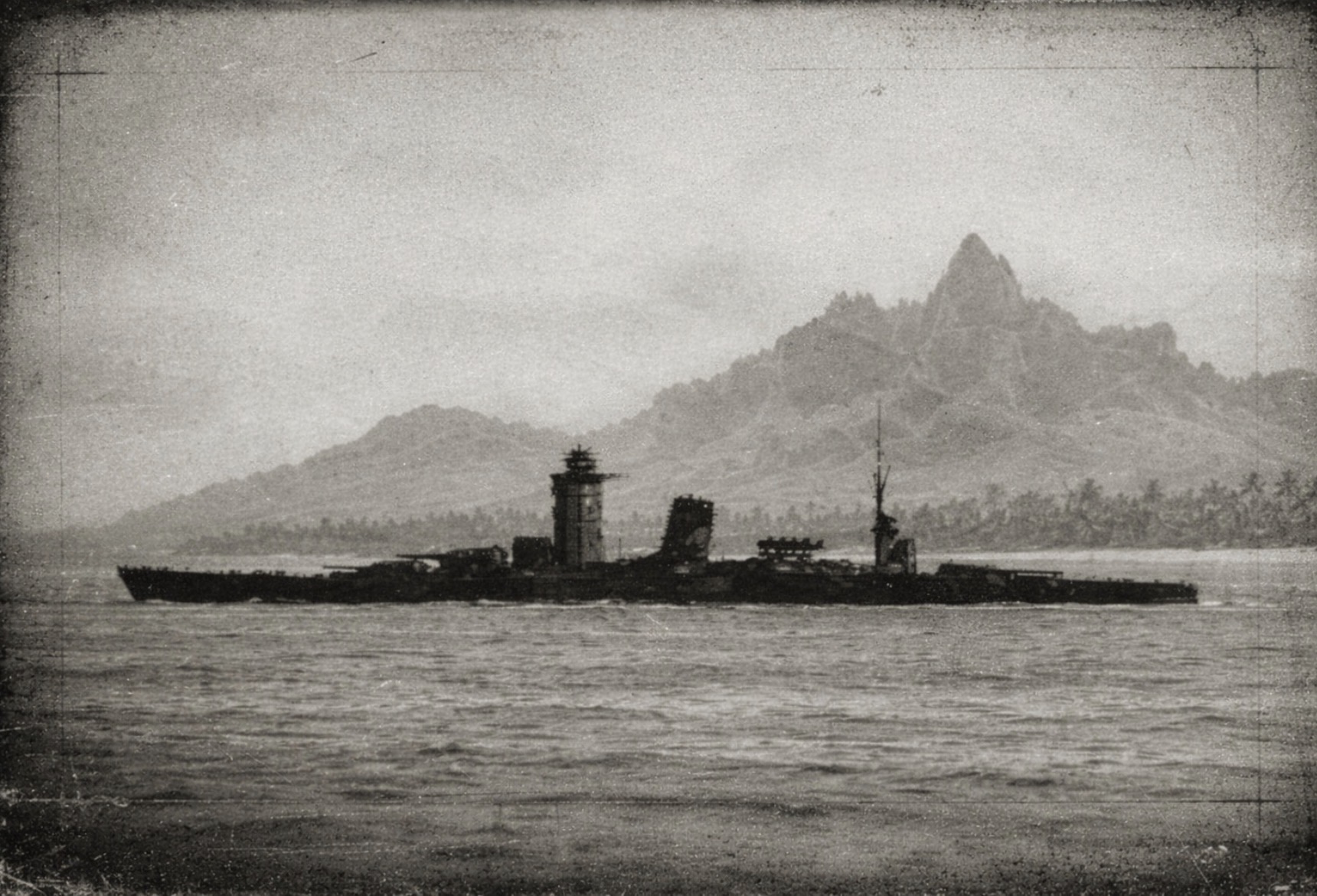
Local Intelligence reports receipt of first photographic evidence of new large Japanese cruisers. Both vessels recently completed fitting-out at Kure Naval Arsenal.
From examination of the photographs, together with other available intelligence, we continue to believe these ships are approximately 30,000 tons deep load, armed with nine 12-inch guns in three triple turrets; maximum speed believed to approach 35 knots. A heavy torpedo armament is also considered probable.
Present assessment remains that these ships were designed and laid down as units of the Japanese battle fleet, intended to engage opposing cruiser and destroyer screens in advance of a general fleet action. In this role they supplement, and are intended in due course to replace, KONGO-class battle-cruisers.
While primarily fleet units, it is also considered likely that in war they could be employed independently against trade, and they carry aircraft for reconnaissance.
Japanese naval authorities appear to assume that we remain unaware of the true character and scale of these vessels, continuing to describe them publicly as “heavy cruisers” intended to replace the FURUTAKA class.
Photograph, together with an approximate profile sketch, will be forwarded to Admiralty as matter of urgency. Copies have also been issued to Captains, Eastern Fleet.
Names of ships are believed to be KITA and YARI, in accordance with Japanese practice of naming first-class cruisers after mountains. Photograph, taken early last month at Truk Lagoon, is believed to show YARI.
Should circumstances require, and when opportunity permits, it is intended to engage these vessels with battle-cruisers.
Burnett.
Re: Nautical Vignettes
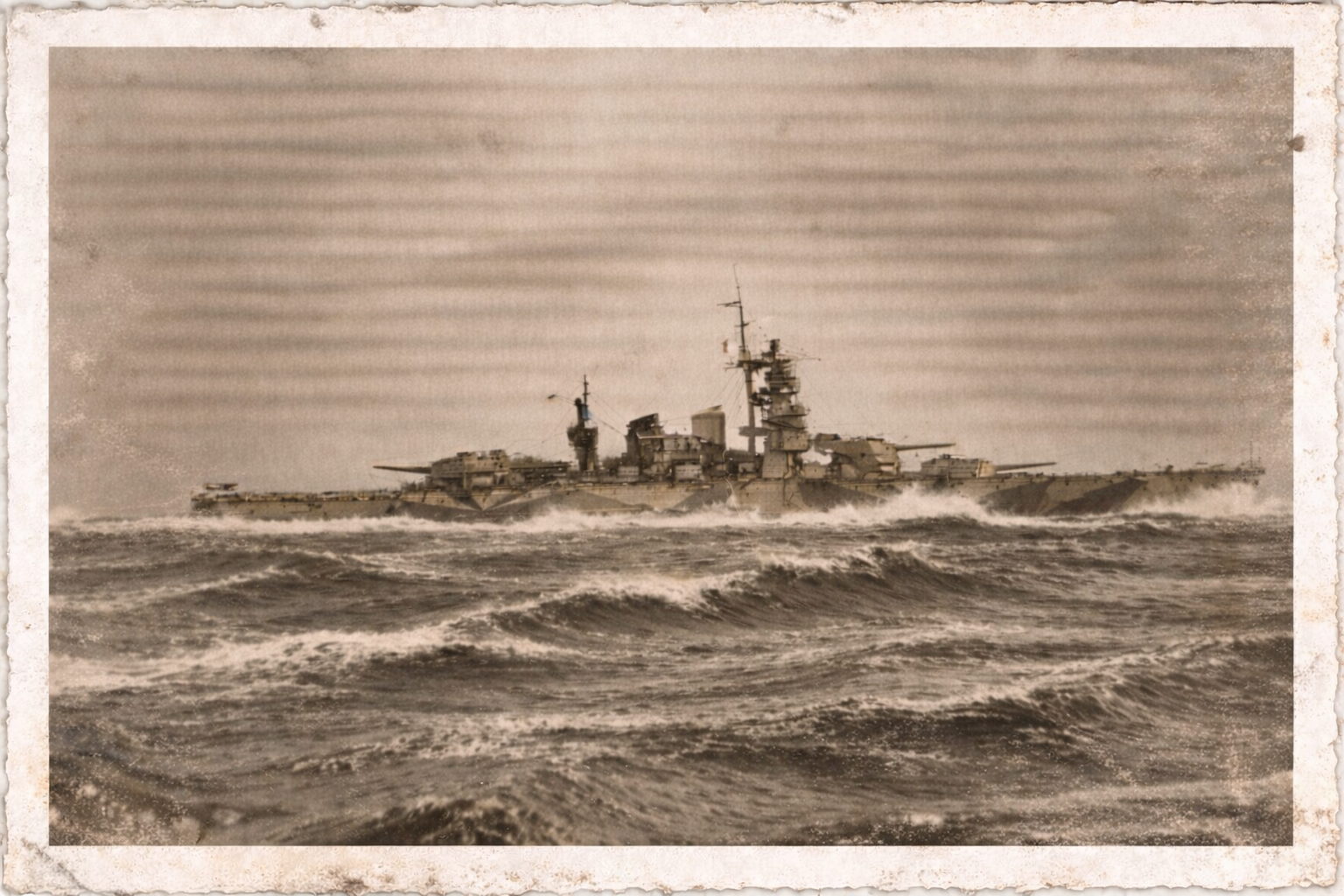
The third pair of Littorio-class battleships were laid down in late 1939 as part of the Regia Marina’s ambitious 1938–39 major fleet plan. The two capital ships were ordered alongside 20 destroyers and 60 submarines, as well as the requisition of the liners Roma and Augustus for conversion to fleet carriers.
In the wake of the orders for Roma and Impero, Supermarina briefly examined the possibility of developing a larger class of battleship armed with 16-inch guns. This option was ultimately rejected on pragmatic grounds, with Italian naval leadership electing instead to repeat the nominally 35,000-ton Littorio-class, retaining its 15-inch gun battery.
Constructed at Cantieri Riuniti dell’Adriatico in Trieste, Lepanto and Venezia took names heavy with historical symbolism: the former invoking one of the foundational battles—and enduring myths—of Italian national unity, the latter recalling the first Italian polity to exercise sustained maritime dominance in the Mediterranean.
Both ships incorporated a series of evolutionary improvements over their predecessors, including revised torpedo-defence arrangements, strengthened anti-aircraft batteries, and updated electronic and fire-control systems.
Despite the concurrent authorisation of two fleet carriers, the new battleships retained organic air complements, initially operating Reggiane Re.2001 fighters, which were replaced by more advanced interceptor aircraft after their commissioning.
The construction of the fifth and sixth Littorio-class units, alongside the first two Sachsen-class battleships of the Kriegsmarine, prompted corresponding French and British responses. The Marine Nationale authorised Alsace and Normandie, while the Royal Navy accelerated work on Monarch and Centurion, the final members of the Lion class, underscoring the renewed capital-ship competition of the early 1940s.
The photograph reproduced here shows Lepanto making speed in rising swells in the Arabian Sea during her first ‘oceanic’ deployment outside the Mediterranean in early 1945. This voyage underscored Italy’s enduring interest in the Indian Ocean—an ambition viewed with continued unease by British naval planners.
-
jemhouston

- Posts: 6535
- Joined: Fri Nov 18, 2022 12:38 am
Re: Nautical Vignettes
Thank you for sharing.
-
Belushi TD
- Posts: 1894
- Joined: Thu Nov 17, 2022 11:20 am
Re: Nautical Vignettes
OOOoooo, I see some interesting stuff here....
Is this part of a universe you're developing, or is it the logical extension of naval construction in the absence of a general war not starting until the late 40's? Either way, I want more!
Belushi TD
Is this part of a universe you're developing, or is it the logical extension of naval construction in the absence of a general war not starting until the late 40's? Either way, I want more!
Belushi TD